
With each day, it seems that we all have a new threat or risk to worry about. Lately, there’s been a lot said about the dangers of blue light exposure, with lots of things to buy that supposedly help fix the problems it can cause.
Wouldn’t you know it, blue light actually can create some issues that could negatively impact your health and wellbeing. Let’s discuss it, and what you can do to address it.
What is Blue Light?
Let’s start off with some basic science: what we see as “light” is just what our minds perceive it to be. There are actually many different kinds of light rays that all interact to provide us with what we see each day.
One kind of light ray—blue light rays—has the highest energy levels of the bunch, paired with the shortest wavelength. Blue light rays occur naturally in sunlight, and also come from a lot of indoor sources: LED and fluorescent lighting, electronics, televisions, computers, and the mobile devices we’re all so fond of.
Now, the human eye is naturally suited to help filter out certain types of light, ultraviolet light included. Blue light isn’t included.
So, while blue light can help to improve some cognitive functions like alertness and memory while promoting wakefulness and healthy amounts of sleep, it can also be a detriment in some ways (particularly in terms of its contributing to eye strain and macular degeneration).
Where Our Devices Come into This
Historically speaking, the sun and other natural forms of light were the only way that humanity got any exposure to blue light at all for most of human history. It really wasn’t until incandescent light was created that there was another option available.
However, as we’ve surrounded ourselves with more and more artificial light sources, we’ve exposed ourselves to more blue light than ever. In doing so, we’ve shifted the balance… and it certainly doesn’t help that our modern lights contribute more blue light than any incandescent bulb ever could.
In terms of blue light’s impact, this could prove to be serious. Let’s consider what a Harvard study observed about blue light exposure compared to other kinds when exposed for the same amount of time. After six and one-half hours of blue light exposure, enough melatonin (the hormone that dictates the body’s circadian sleep patterns) was suppressed enough to shift these circadian rhythms by three hours. In comparison, the same exposure to green light only caused an hour and a half shift—literally half of what blue light did.
These effects can be compounded, not only decreasing sleep time, but also increasing the risk of depression, diabetes, and cardiovascular issues.
Fixing the Blue Light Problem
Clearly, blue light can be a real problem if it isn’t managed. Fortunately, there are simple ways to minimize its effects, like:
- Avoiding brighter screens within three hours of bedtime
- Making sure you’re getting plenty of exposure to other kinds of light to help regulate your circadian rhythms
- Using red lights over blue lights for nighttime light, helping to avoid melatonin suppression
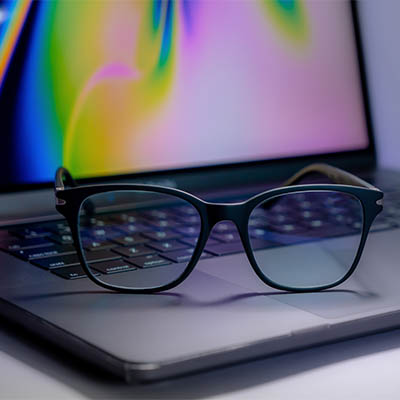
- Investing in blue-light filtering glasses or time-controlled filtering apps
Furthermore, modern devices increasingly come with settings to help you accomplish some of these things.
In Windows, accessing your Settings and going to System > Display > Night Light Settings allows you to Schedule your device’s Night Light configuration, either based on Custom times or from Sunset to Sunrise.
Macs offer Night Shift, which is customizable from System Preferences > Displays > Night Shift.
Macatawa Technologies is here to help you manage all of your IT challenges. For more assistance with your business’ technology, give us a call at (616) 394-4940 and find out what we have to offer.