
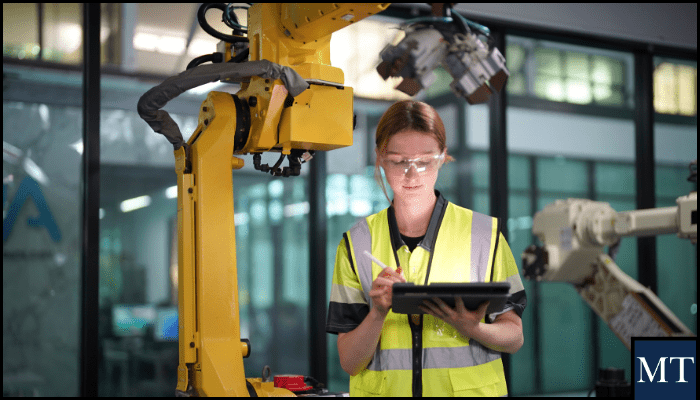
What Impact Does AI Have on Manufacturers?
Manufacturing has always evolved with technology, but the rise of AI in manufacturing is creating one of the most significant shifts the industry has seen in decades. Whether you’re running a small shop or a multi-facility operation, AI is no longer a futuristic tool, it’s becoming a practical way to improve uptime, reduce waste, and strengthen decision-making. With skilled labor shortages and rising production costs, manufacturers that adopt AI early are gaining a serious competitive edge.
Predictive Maintenance Keeps Production Moving
Unexpected equipment failure can derail an entire day’s output. This is where AI in manufacturing has immediate, measurable impact. By analyzing sensor data – temperature, vibration, sound patterns, energy usage – AI can detect performance changes long before a breakdown happens.
Instead of waiting for a machine to fail, maintenance teams can schedule repairs during planned downtime. This shift toward predictive maintenance saves thousands in emergency service calls, extends equipment life, and keeps production consistent.
Real-Time Quality Control Reduces Waste
Catching defects early has always been the goal, but AI elevates what’s possible. With high-resolution cameras and machine-learning models, manufacturers can inspect products in real time with accuracy levels far beyond manual checks. AI doesn’t get tired, distracted, or inconsistent. The result? Less scrap, fewer reworks, and a tighter, more reliable production process. As more manufacturers adopt these tools, AI-powered quality control is quickly becoming a new standard – not a luxury.
Stronger Decision Making on the Shop Floor
Data has always existed in manufacturing environments – cycle times, outputs, sensor readings – yet it often goes unused. AI in manufacturing turns that raw data into instant, actionable insight. Managers can forecast demand more accurately, optimize staffing, adjust scheduling, and identify bottlenecks before they slow down the line. This gives manufacturers the agility to respond to market shifts faster and with more confidence, especially during volatile seasons.
A Safer Workforce
AI doesn’t replace skilled workers – it helps them work smarter and safer. Wearable sensors and environmental monitors can identify hazards like excessive heat, machine anomalies, or unsafe movement patterns. AI-powered tools also assist with complex tasks, guiding technicians through procedures step-by-step and reducing error rates. In environments where staffing is tight, AI allows teams to do more without burning out.
Supply Chain Visibility When It Matters Most
Recent years have shown how fragile supply chains can be. AI in manufacturing helps mitigate these risks by predicting delays, monitoring supplier reliability, and improving inventory planning. With AI-driven visibility, manufacturers aren’t just reacting to problems, they’re anticipating them.
Better Protection for Connected Machinery
Connected machines open the door to efficiency, and unfortunately, to cyber risk. AI-driven security tools can detect unusual behavior on factory networks, isolate compromised devices, and respond to threats faster than any human technician could. As manufacturing becomes more digitized, AI-driven cybersecurity is becoming essential.
Have more questions about this topic? We’re here to help. Contact us for answers, guidance, or support.